Pampas grass (Cortaderia selloana) is a grass native to South America, prized for its silky plumes in home décor. Before heading out to gather some, it’s important to check the regulations: since the ministerial order of 2 March 2023, keeping and transporting live specimens of this species have been prohibited in mainland France, unless an exemption applies. Dried plumes are still permitted, but how and where you harvest them determines whether it is legal.
French regulations on pampas grass: what the 2023 order changes
Cortaderia selloana is now listed as a regulated invasive alien species. The order of 2 March 2023 prohibits the sale, purchase, exchange, transport and possession of live specimens in mainland France.
In practical terms, bringing home an entire plant or a plume that still contains seeds is an offence. Cutting already-dried flower heads, however, does not fall into the same category, since mature, dried plumes are no longer considered live specimens capable of reproducing.
The distinction is a technical one: a plume harvested too early may still contain viable seeds and contribute to the plant’s spread. The LIFE Coop Cortaderia project notes that the cutting method depends on the plant’s condition and the site, and that improper intervention can encourage its spread. Waiting until the plumes are fully open and dry (cream-coloured, fluffy in texture, with no green seeds) helps reduce this risk.
Before picking pampas grass flowers on a particular site, you should also check who owns the land. On private property, you must obtain the owner’s permission. On communal land or in a protected area, the local council or site manager may prohibit all harvesting, even of plants considered harmful.
Where to find pampas grass in France: habitats and regions
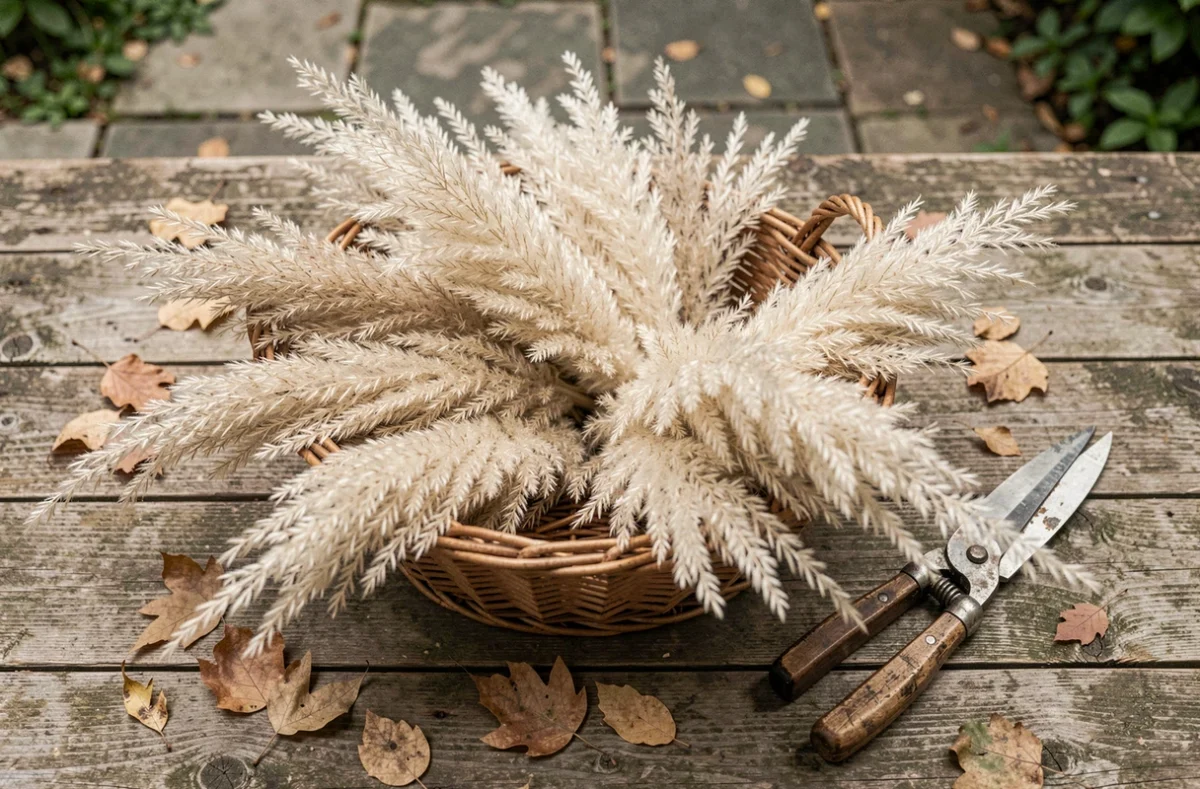
Cortaderia selloana mainly colonises Atlantic coastal areas, from Brittany to the Basque Country. The Aquitaine coast is particularly affected: the banks of the Adour and Bidouze rivers, along with wetlands in the south-west, are home to dense populations. Brittany’s coastline also has significant infestations, to the point that some local authorities have given up trying to eradicate the plant because it has spread so extensively.
Beyond the Atlantic coast, populations can be found along the Loire, in Vendée and, occasionally, on the Mediterranean coast. The most common habitats include wasteland, the verges of major roads, railway embankments and abandoned industrial sites.
How to spot good locations
The plumes are easy to see from a distance because of their height (mature clumps often grow to over two metres). The best way to find them is to look out for them from a car or bicycle along roads between September and November.
- Verge areas along departmental and national roads in the Atlantic coastal region, particularly between Nantes and Bayonne
- Industrial wasteland, disused car parks and railway embankments where the plant can grow without maintenance
- Riverbanks and wetlands inland from the coast, such as the Adour and Bidouze valleys in Aquitaine
Some local authorities organise community removal campaigns. Contacting the council’s environmental services department may sometimes allow you to collect plumes during these events, legally.
When to harvest and how to cut the plumes
Pampas grass flowers in mainland France from September to November. The plumes first appear compact and slightly pinkish or silvery, then gradually open into fluffy, cream-coloured plumes.
The right time to cut
Harvesting too early can cause two problems: viable seeds may spread, and the moisture-laden plume may dry poorly and turn brown. The right stage is when the plume has fully opened, feels dry to the touch and its seeds are beginning to detach naturally in the wind.
In practice, the ideal window is between mid-October and late November, depending on the region and that year’s weather. A plume picked at this stage will retain its shape and colour for several years once dried.
Equipment and precautions
The leaves of Cortaderia selloana have sharp edges that can cut the skin. Wearing thick gloves (such as reinforced gardening gloves), long sleeves and protective eyewear is recommended.
- Use loppers or a billhook to cut the stem at the base of the plume, about 50 centimetres below the flower head
- Avoid shaking the plume on site so you don’t scatter any remaining seeds
- Place the plumes upside down in a bag or wrap them for transport to minimise the loss of fluff
- After harvesting, spray the plumes with hairspray to set the feathery strands and stop them from scattering indoors
Drying and preserving pampas grass flowers for decoration
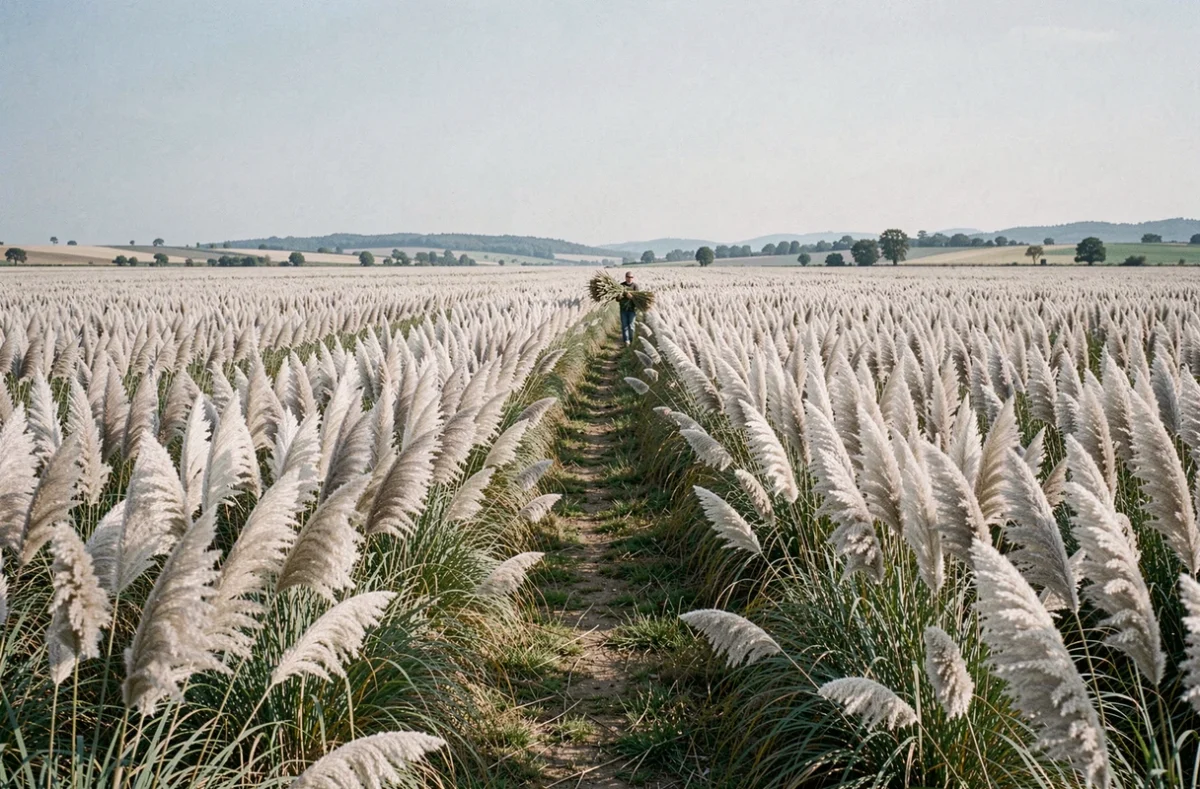
Once brought home, the plumes should be dried in a dry, well-ventilated place away from direct light for two to three weeks. Hanging them upside down by the stems with string helps preserve their spreading shape.
Hairspray, applied in a light coat from a distance, is still the most common way to set the feathery strands for lasting results. Two or three successive coats, allowing each to dry in between, are enough to keep a plume looking good in a vase for several seasons.
Prolonged exposure to sunlight will turn naturally pale plumes yellow. For indoor arrangements, a bright spot out of direct sunlight will preserve their original colour. Some florists sell dyed plumes, but natural shades, from creamy white to pink, remain the most colourfast over time.
Dried pampas grass needs no water or special care. A light dusting with a hairdryer on the cool setting once a month is enough to keep the plumes full. Replacing them every two to three years helps keep arrangements looking fresh.