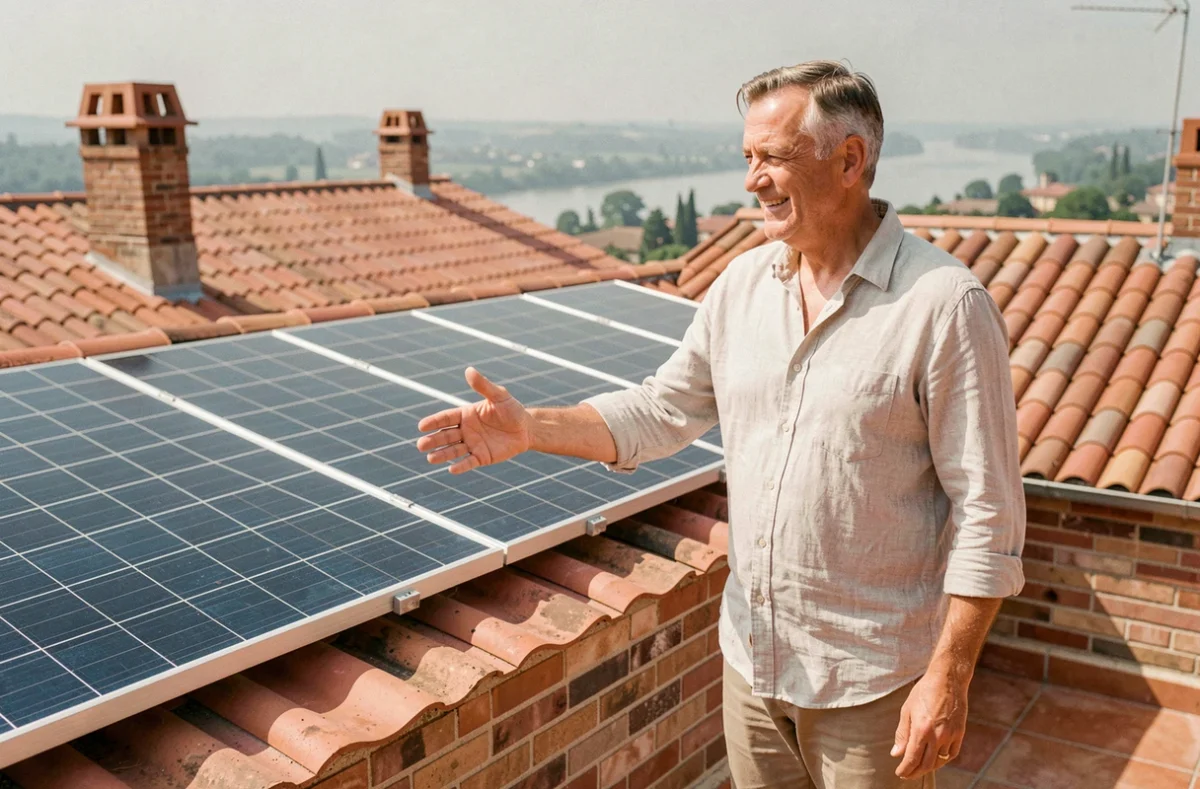
The energy efficiency of a house primarily depends on the balance between the energy consumed and the energy produced on-site. In Toulouse, the annual sunshine exceeds 2,000 hours, placing the region among the most favorable in France for residential photovoltaic installations. Harnessing this solar resource requires understanding a few technical mechanisms before getting started.
Solar self-consumption rate: the parameter that quotes do not detail
The self-consumption rate measures the share of solar electricity that the household uses directly, without reinjecting it into the grid. An installation can produce a lot and yet only cover a fraction of actual needs if production peaks (midday) do not coincide with consumption peaks (morning, evening).
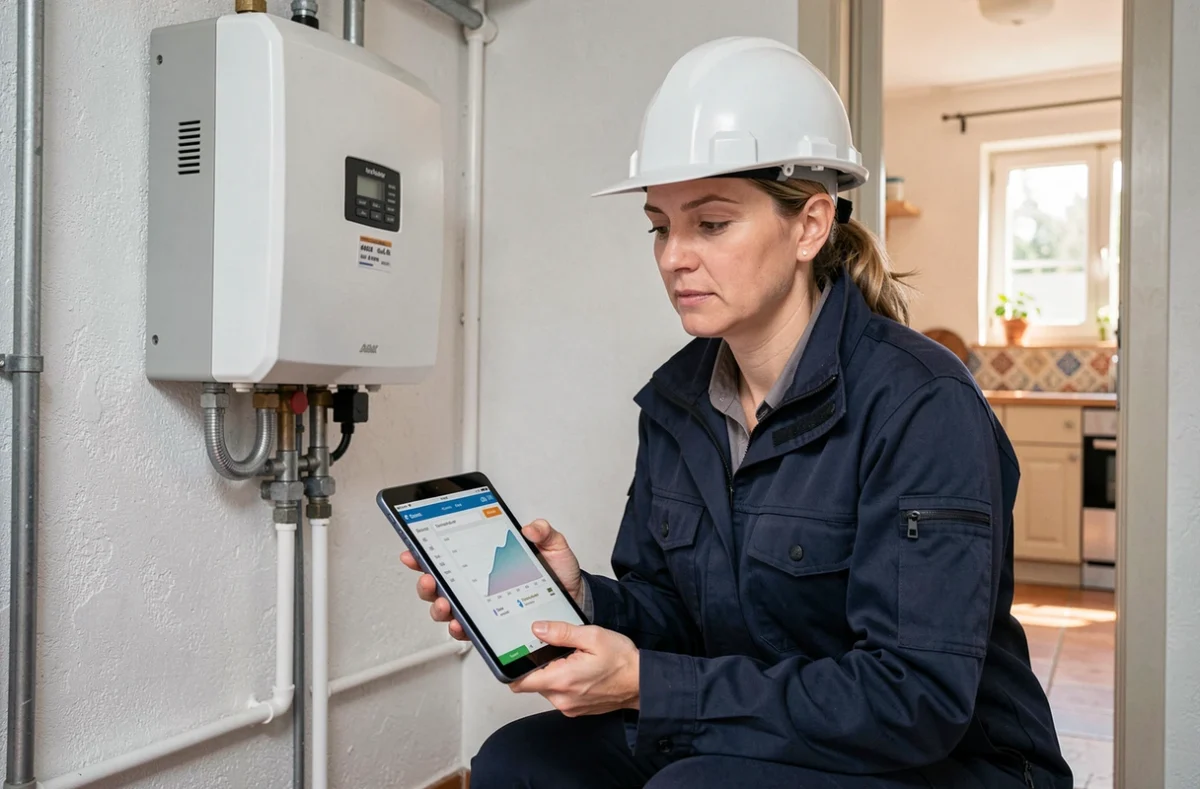
Before considering the purchase of a storage battery, there is a more accessible lever: controlling electrical devices. Programming the water heater, washing machine, or charging an electric vehicle during solar production hours allows for increasing this self-consumption rate without additional investment. Futur Énergie recommends prioritizing this adaptation of usage and only evaluating a battery after analyzing the household’s consumption profile.
A comprehensive file on solar energy in Toulouse on Habitat Expo details the configurations suitable for homes in the region, taking this often underestimated parameter into account.
Orientation and tilt of solar panels in Toulouse
The production of a photovoltaic panel depends on two physical variables: the orientation of the roof and the tilt angle relative to the horizontal. In Toulouse, a full south orientation with a tilt between 30 and 35 degrees offers the best annual yield. This is not an absolute rule: a roof oriented southeast or southwest remains usable, with a moderate loss of production.
What truly penalizes performance is shading. A tree, a neighboring building, or a chimney casting a shadow on part of the panels can disproportionately reduce production. In series installations, a single shaded panel can limit the yield of the entire string. Micro-inverters or power optimizers allow for isolating each panel and limiting this effect.
Adapting sizing to actual consumption
A common mistake is to oversize the installation thinking it will increase savings. In self-consumption, an installation that is too large produces a significant surplus, sold at a price much lower than the purchase price of electricity. Sizing should be based on the household’s annual consumption, not the available roof area.
For an individual house in Toulouse, residential installations generally remain below the threshold of 9 kWc, a limit that also conditions access to certain tax advantages.
Reduced VAT and subsidies for photovoltaics in Toulouse in 2026
The tax framework for residential solar has evolved. Since October 1, 2025, the VAT rate of 5.5% can apply to residential installations up to 9 kWc, under certain conditions. The decree of September 8, 2025, specifies that the panels must meet environmental criteria and that the installation must include an energy management system controlling at least two uses (heating, hot water, vehicle charging, for example).
This point changes the game for calculating profitability: the reduced VAT does not automatically apply to all installations. A quote that immediately displays a VAT of 5.5% without verifying these technical criteria deserves special attention.
- The self-consumption bonus remains accessible for surplus sale installations, with an amount that varies according to the installed power.
- Local aids in Occitanie can complement national schemes, but they evolve regularly. Checking their availability with the local authority before signing a quote remains the most reliable approach.
- The zero-interest eco-loan (éco-PTZ) can finance part of the installation as part of a comprehensive energy renovation project.
Administrative procedures and roofing constraints in Toulouse
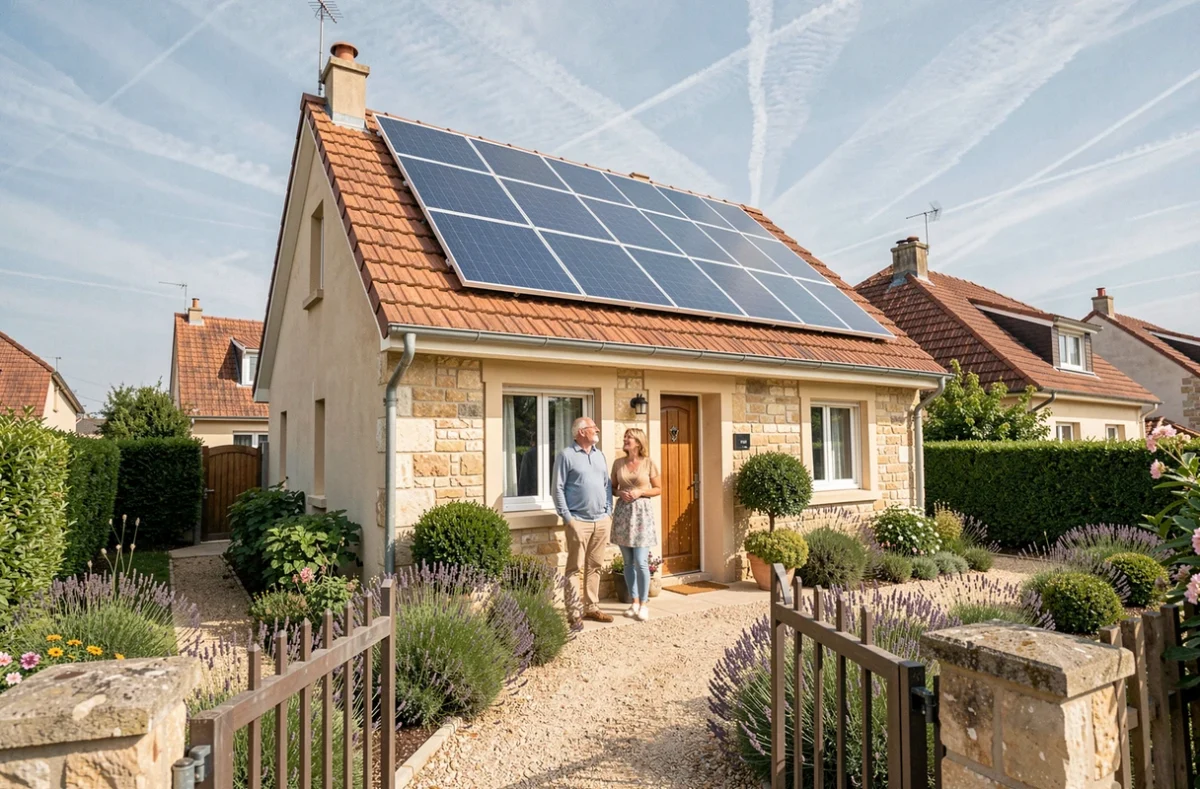
The procedures vary depending on the precise location of the housing. A prior declaration of works is required for a roof installation in most cases. In protected areas (proximity to a historical monument, ABF perimeter), the constraints are stricter and may impose specific colored panels or prohibit certain configurations visible from the public road.
The Local Urban Planning Plan (PLU) of Toulouse Métropole also frames the possibilities. Before any order, consulting the town hall’s urban planning service helps avoid a refusal after purchasing the equipment.
Choosing a qualified installer
The RGE certification (Recognized Guarantor of the Environment) of the installer conditions access to public aid. Without this certification, the self-consumption bonus and reduced VAT are not applicable. Several qualified installers operate in the Toulouse area, but comparing at least three quotes remains the most direct method to assess the consistency of a technical and pricing proposal.
- Check the RGE QualiPV certification of the installer on the official website.
- Compare the proposed power with the household’s actual consumption.
- Request an estimate of annual production considering the orientation and specific shading of the roof.
Solar energy in Toulouse is not just a matter of favorable sunshine. The profitability of a photovoltaic project relies on a concrete triptych: sizing adjusted to consumption, controlling usage to increase self-consumption, and a rigorous verification of access conditions to aid before signing. The most profitable surplus production is the one that does not need to be sold.