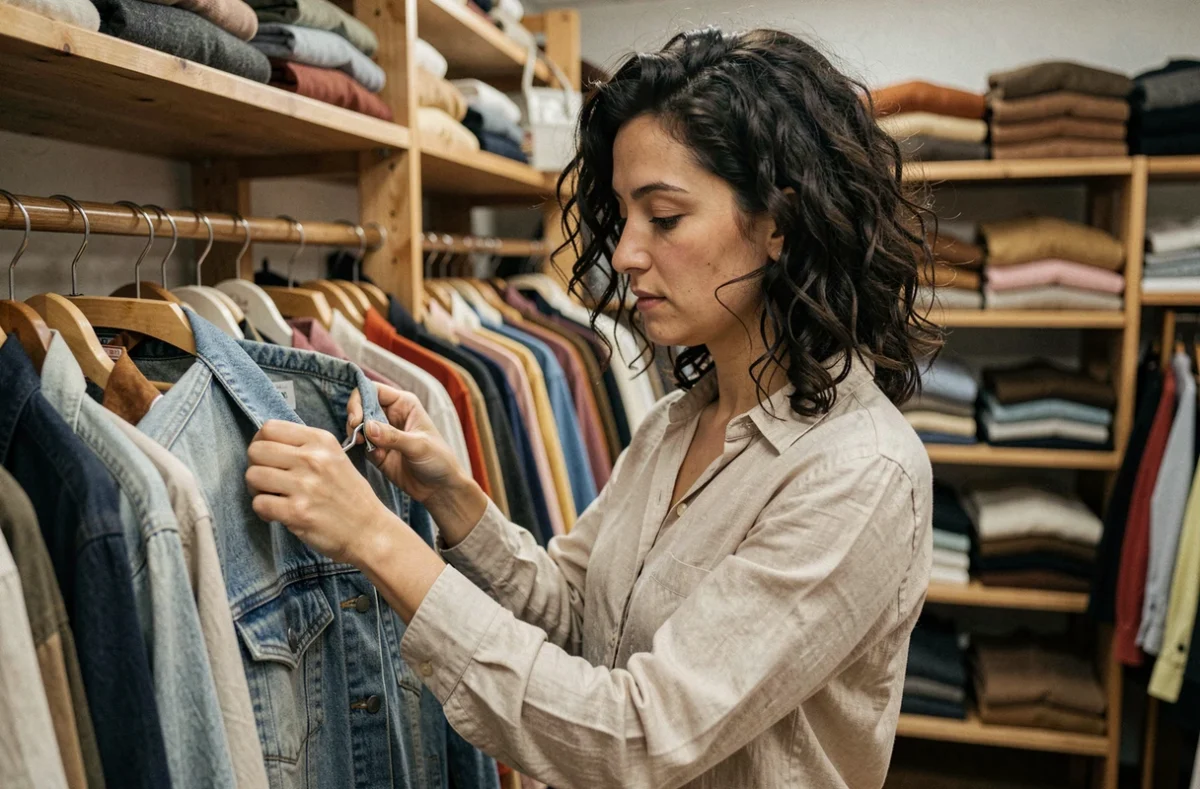
Buying second-hand clothes seems simple: you browse, find a piece at a low price, and leave satisfied. In practice, a poorly thought-out second-hand purchase ends up at the back of a closet, just like an impulsive new purchase. Choosing second-hand clothing requires a precise method to ensure the action is truly responsible and sustainable.
Environmental impact of second-hand: how the purchasing channel changes things
Have you ever noticed that ordering a second-hand garment online generates a package, packaging, and sometimes a return? A report published by Oxfam France in September 2026 clearly distinguishes the impacts based on the chosen channel. Solidarity reuse in physical stores pollutes significantly less than purchasing on a peer-to-peer platform, due to individual logistics and single shipments.
Specifically, a nearby solidarity shop reduces the carbon footprint compared to a shipped package. Group purchases in a local thrift store or neighborhood consignment shop limit transportation and eliminate plastic packaging. This is not a detail: logistics can greatly diminish the expected ecological advantage of second-hand.
The Refashion Barometer 2025, reported by L’Info Durable, highlights another issue. The volume of second-hand clothing is increasing in France, but sales of new clothing are also rising. Second-hand sometimes adds to new purchases instead of replacing them.
For the action to make sense, it must prevent a new purchase or extend the actual lifespan of the garment. As Ei Mag’s fashion advice reminds us, thinking before buying remains the key to responsible textile consumption.
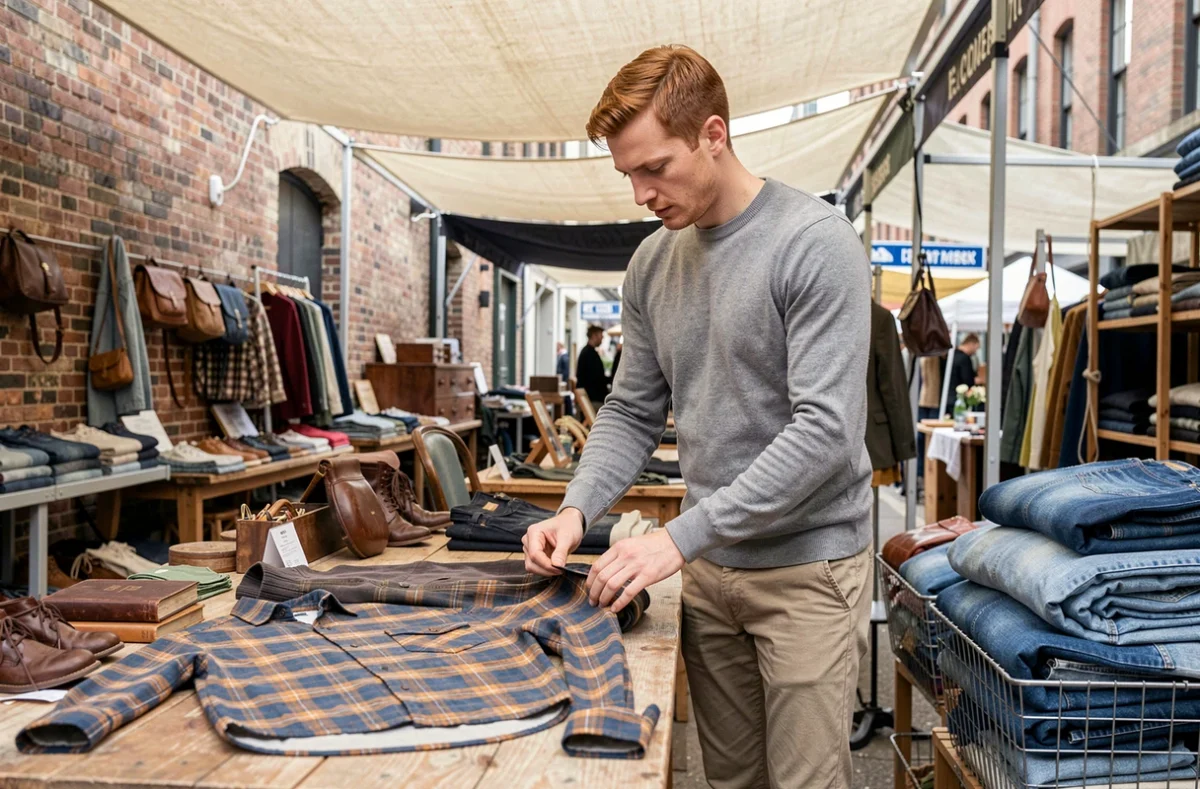
Textile quality in thrift stores: the actions to master before buying
A second-hand garment does not always show its wear visibly. Before heading to the checkout, a few quick checks can help avoid unpleasant surprises.
Read the composition label
The label is the first filter. A fabric made mostly of natural fibers (cotton, linen, wool) ages better than a low-quality synthetic blend. If the label has been cut off, it can be a signal: the seller or previous owner did not want the original brand to be identified, or the garment has been washed too many times.
Touching the fabric between two fingers provides immediate information. A dense, soft cotton still has structure. A fabric that pills with simple friction is at the end of its life, regardless of its visual appearance.
Check specific wear areas
Each type of garment wears out in predictable places. On pants, check the crotch and knees. On a jacket, inspect the elbows and collar. On a shirt, the cuffs and collar bear the brunt of repeated friction.
- Turn the garment inside out to examine the inner seams: pulled threads or irregular topstitching indicate fragile construction or poorly done repairs
- Test the zippers by opening and closing them several times: a zipper that catches will not improve over time
- Check the buttons and buttonholes: a button that barely holds can be resewn, but a stretched buttonhole is hard to repair
A well-inspected second-hand garment lasts as long as a new purchase of equivalent quality. This step takes two minutes and avoids most disappointments.
Responsible wardrobe: buy less but better second-hand
The temptation is real in thrift stores. Low prices encourage the accumulation of pieces that meet no real need. The result: a closet overloaded with clothes worn once or twice, exactly the problem that second-hand is supposed to solve.
Defining the sought-after piece before heading out radically changes the effectiveness of the shopping session. Ask yourself a simple question: what garment is missing from my current outfits? A mid-season jacket? A work pant? This precise intention transforms a random rummaging session into targeted searching.
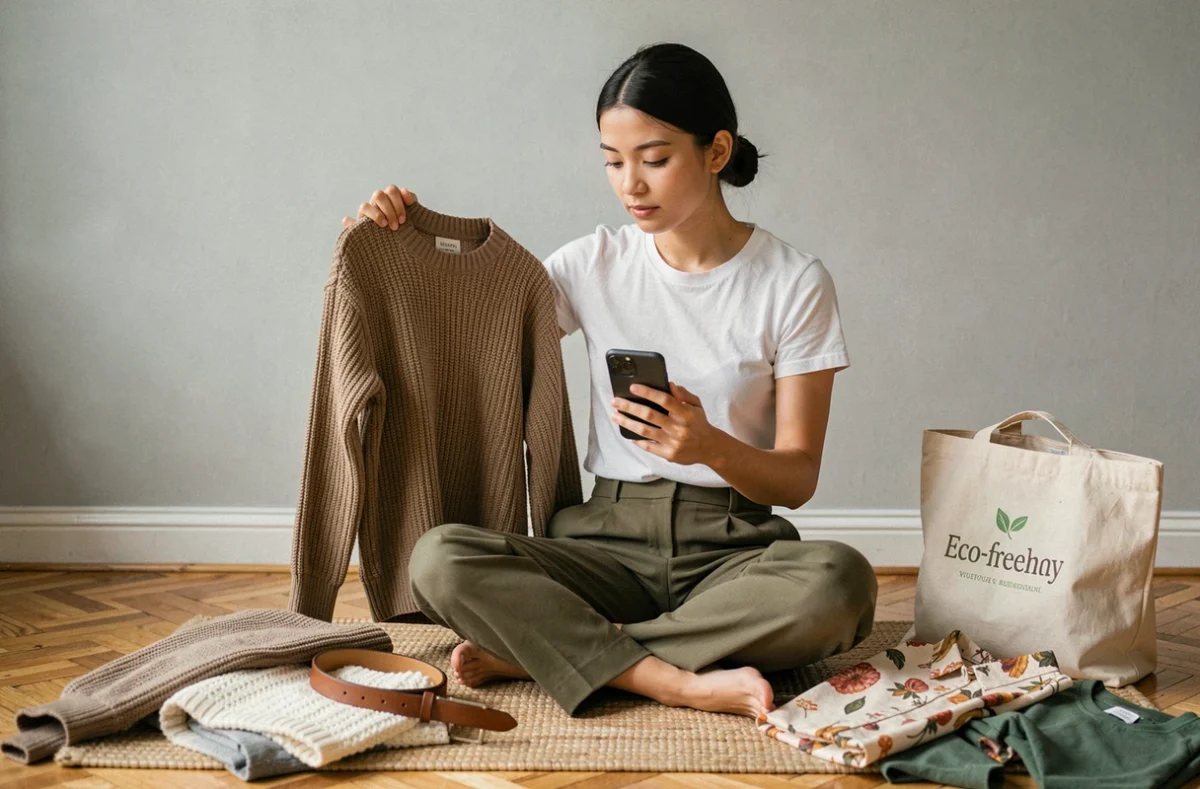
Choose pieces that match the rest of your wardrobe
A second-hand garment that does not pair with anything else will not be worn. Before buying, think of three existing outfits with which the piece could work. If you can’t find two, put the hanger back.
Neutral colors (navy, beige, gray, off-white) make pairing easier. Pieces with strong patterns or cuts heavily marked by an era are riskier, unless you already have a wardrobe that accommodates them. Favoring basics in durable materials increases the number of wears and thus the actual environmental benefit of the purchase.
Post-purchase care: extending the lifespan of second-hand clothing
A second-hand garment has already lived. Its care requires a bit more attention than a new item to maintain its shape and appearance.
The first action after purchase: wash the garment at low temperature with a gentle detergent. This wash removes storage residues and allows you to check the colorfastness. If the fabric bleeds significantly in the first wash, plan to wear it with dark pieces.
- Air dry rather than using a dryer: heat accelerates the wear of already stressed fibers
- Store knits on shelves rather than hangers to avoid shoulder deformation
- Re-sew small snags as soon as they appear: a pulled thread ignored can become a hole after a few washes
- A steam iron restores volume to natural fibers without crushing them, unlike a high-temperature iron
A significant portion of textiles collected in France is not directly reusable. Extending the life of a garment you already own, even if it’s second-hand, remains the most effective action to reduce textile waste volumes. Every additional month of use counts more than the initial mode of purchase.
The choice of second-hand clothing becomes more coherent when it is accompanied by a short circuit, rigorous inspection, and appropriate care. A low price alone is not enough to justify a purchase. The real question remains the same: will this piece be worn regularly for several seasons?