In France, nearly one in four workplace accidents is related to manual handling. Yet some companies continue to ignore ergonomic lifting equipment, despite its proven effectiveness in reducing musculoskeletal disorders and work stoppages.
Automated solutions, adaptable to all site configurations, now allow for productivity optimization without increasing strain. However, their deployment is often hindered by preconceived notions about complexity or investment costs.
Why Ergonomics is Transforming Industrial Handling
Industrial handling is undergoing a revolution, driven by the rise of ergonomics. Nowadays, designing the workstation is no longer just about comfort but has become a performance imperative for the long term. Statistics from the workplace accident sector speak for themselves: as soon as equipment and methods are adapted, musculoskeletal disorders (MSDs) and the resulting absences decrease significantly. Every action, every lift, every movement of a heavy object impacts the health of operators. Reevaluating organization and investing in suitable devices is a bet on cohesion and helps avoid the accumulation of invisible injuries that ultimately become costly.
Quality of Life at Work (QWL) is becoming a true driver of competitiveness. By improving ergonomics, the company enhances safety, well-being, and team engagement. Rethinking positions is not just about limiting risks: it allows for refining every action, streamlining tasks, and making employees more autonomous. Social dialogue is intensifying around these issues, as expectations change and the demand for concrete solutions accelerates.
The ergonomic approach is embodied in very concrete choices: height-adjustable workstations, assistance for lifting heavy loads, tools that reduce manual effort. These practices, validated by experience and widely disseminated, particularly on the site https://www.transtec.fr/, are gradually becoming the norm. Industrial ergonomics does not just transform the way loads are handled: it disrupts the work culture, risk prevention, and the place given to humans in the workshop.
What Equipment and Technologies for Effective and Safe Lifting?
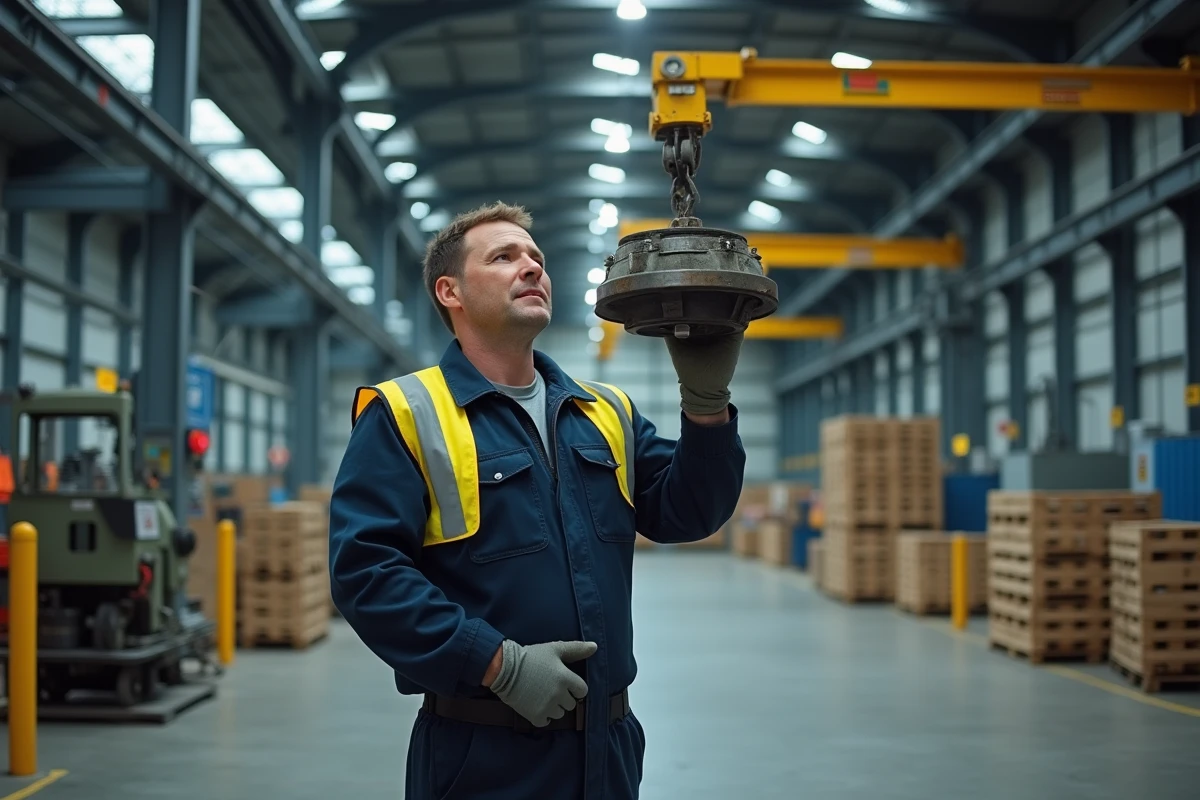
The diversity of industrial lifting solutions today offers companies precise answers to combine safety, efficiency, and adaptation to each work environment. The overhead crane structures the space and allows for effortless movement of heavy loads over long distances with perfect control. Cranes, gantries, or jibs serve a similar role: lifting, moving, positioning, always maintaining precision and safety.
Among the essential equipment, we find the elevating table, which simplifies loading and unloading, significantly easing manual work. Hoists and worm gears provide finesse and control when handling delicate parts. As for slings, they adapt to all shapes, volumes, and materials, becoming essential in environments where versatility is key.
To optimize logistics within the company, there is a whole range of tools:
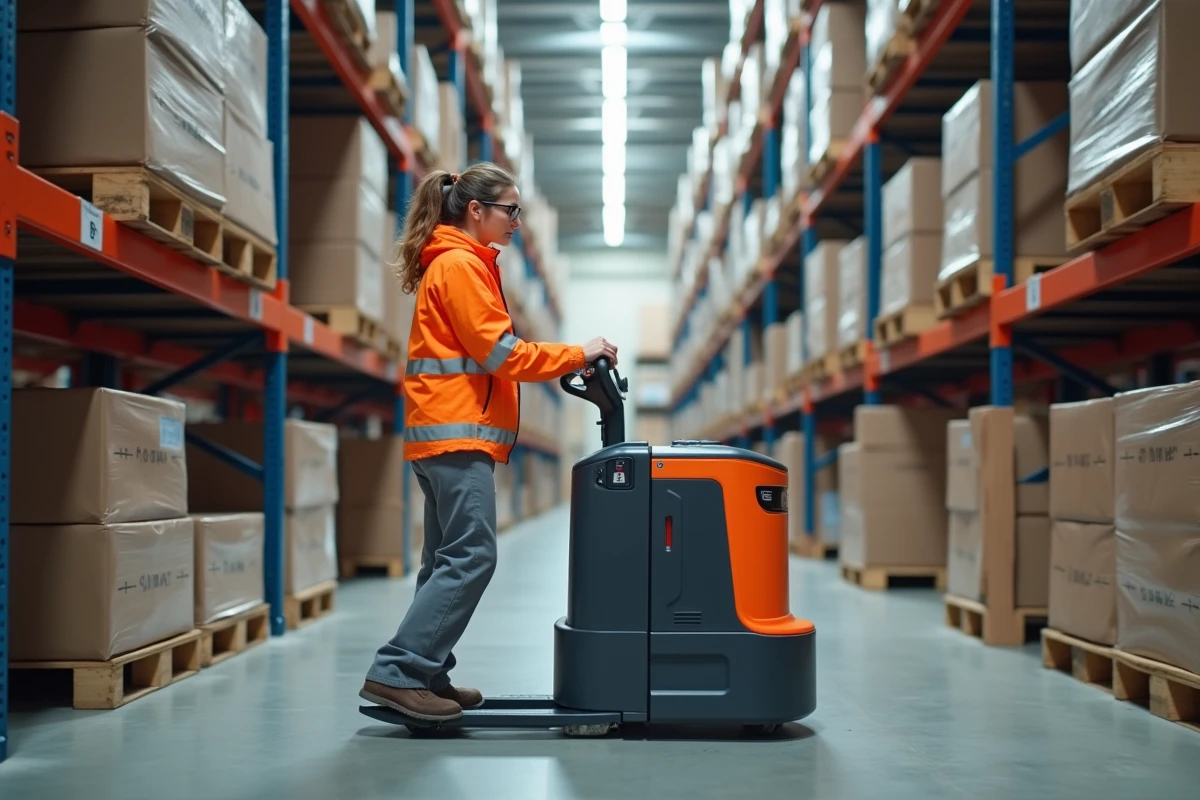
- pallet trucks, industrial trailers, and conveyors make flows smoother and reduce fatigue from repeated movements.
- Handling robots or collaborative robots take on repetitive tasks, thereby limiting human errors and freeing up time for high-value operations.
The integration of solutions like the automated palletizer and the use of IoT are revolutionizing the management and maintenance of equipment. Thanks to connected systems, it becomes possible to monitor in real-time, predict failures, and avoid unplanned interruptions. Compliance with the Machinery Directive 2006/42/EC and the EN 13155 standard enhances the reliability of installations while protecting employees.
These pieces of equipment come together to form a robust logistics system, where each component, from the dock bumper to the running rail, plays a role in safety, profitability, and reducing maintenance costs. Ultimately, a better-prepared organization faces the challenges of today’s industry.
Adopting Best Practices to Prevent Risks and Improve Performance
In the industrial handling sector, safety is a daily concern. Regular training for operators is non-negotiable: it ensures mastery of actions, reduces the frequency of work accidents, and extends the lifespan of equipment. Given the variety of loads and the complexity of spaces, vigilance remains the rule. Here’s what makes a difference on the ground:
- each workstation requires rigorous preparation, strict verification of instructions, and continuous adaptation of tools.
Conducting an audit of practices allows for detecting weaknesses, readjusting operating methods, and enhancing the fluidity of handling processes. By leveraging data from a management software (KPI), managers can anticipate deviations, optimize flows, and dynamically organize the storage area. Preventive maintenance, far from being a mere addition, proves decisive: it maximizes the availability of installations, avoids unexpected downtime, and reduces the overall bill.
To strengthen engagement and performance, recognizing skills is invaluable:
- certification highlights the expertise of teams and ensures strict adherence to safety standards.
The adoption of exoskeletons helps alleviate fatigue, facilitates the carrying of heavy loads, and protects health in the long term. Every initiative, every improvement resonates throughout the collective:
- rethinking industrial handling is choosing a sustainable balance between safety, operational efficiency, and intelligent work organization.
When performance aligns with protection, the workshop becomes a shared ground for progress, where each innovation shapes a safer and more agile future.