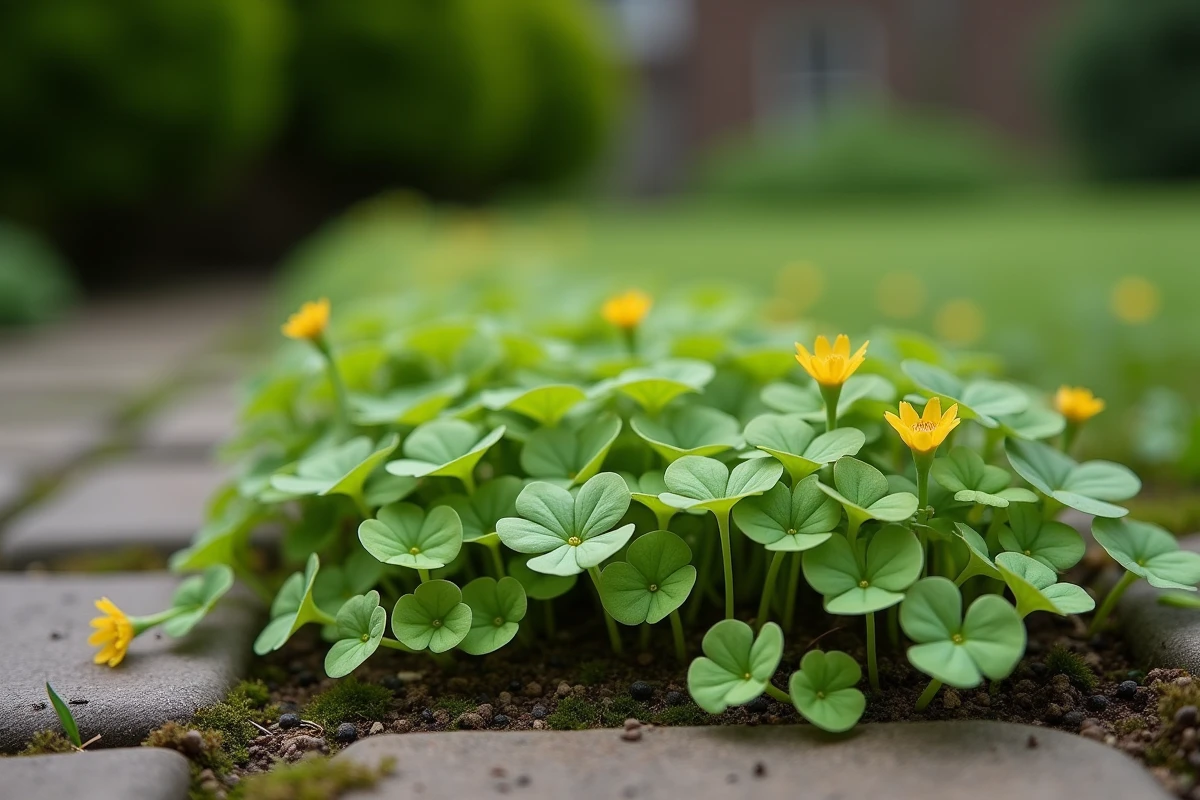
You pull out clumps of oxalis from your flower beds, and two weeks later they are back, denser than before. This frustrating scenario is due to the very biology of the plant: oxalis produces tiny underground bulbs that detach at the slightest pulling. Choosing the right herbicide for oxalis requires understanding this reproduction mechanism; otherwise, each intervention may worsen the infestation.
Bulbs and stolons: why oxalis resists conventional herbicides
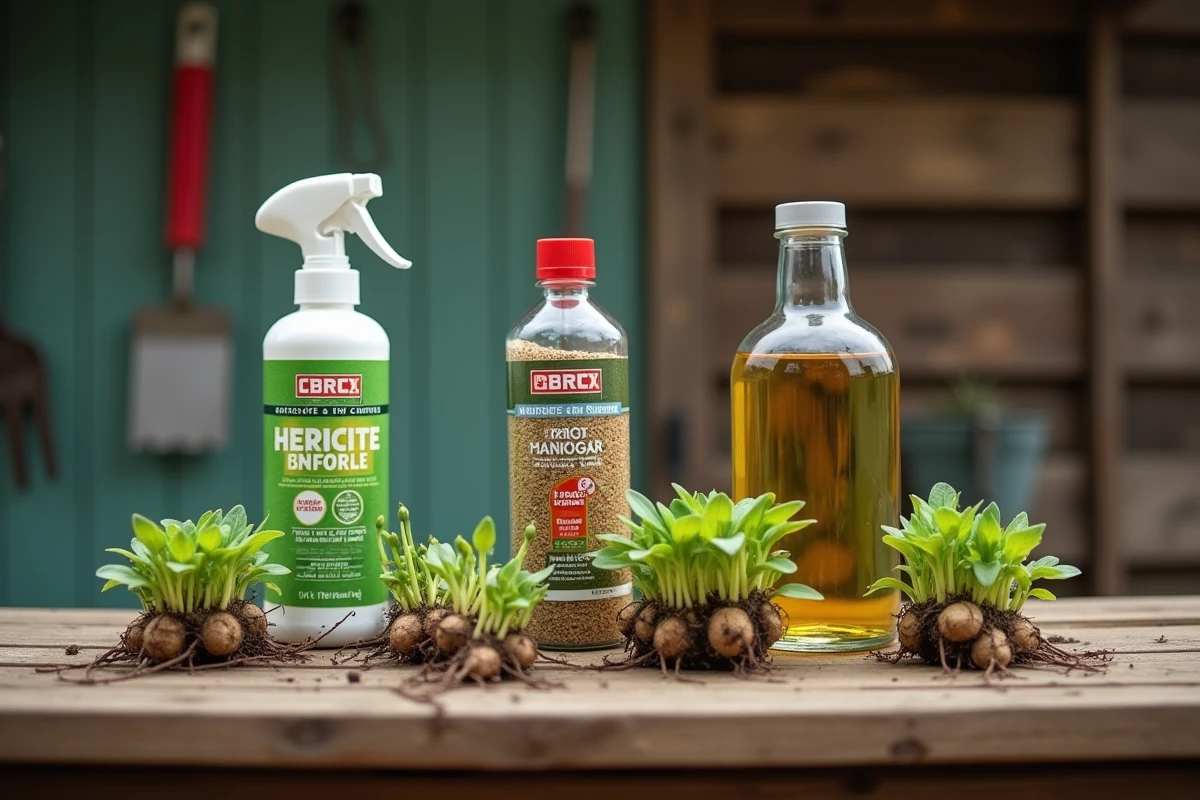
Oxalis does not only multiply by seeds. Underground, each plant forms clusters of small bulbs, sometimes barely visible to the naked eye. When you pull out the plant or hoe the area, these bulbs scatter in the soil and germinate independently.
A contact herbicide, which only burns the foliage, does not solve anything. The aerial parts disappear, but the underground network remains intact. Only a systemic product migrates to the bulbs through the sap to destroy the plant deeply.
This is why treatments based on vinegar or boiling water yield disappointing results on oxalis. They act on the surface. Regrowth occurs within a few weeks, sometimes more vigorous, because the root system has not been affected. If you are wondering which herbicide to prefer for oxalis, the main selection criterion remains this systemic capability.
Selective lawn herbicide or total herbicide: the right choice depending on the treated area
Have you noticed oxalis in your lawn and in your flower beds? The product to use will not be the same in both cases.
Oxalis in the lawn
A selective lawn herbicide targets dicotyledons (broadleaf plants) without damaging grasses. Oxalis, with its clover-shaped leaves, falls into this category. These products generally contain molecules that disrupt the growth of broadleaf plants while sparing the grass.
Application should be done on a well-established lawn, during the active growth period of oxalis (spring and early autumn). Two applications spaced three to four weeks apart are often necessary to deplete the reserves of the bulbs.
Oxalis in flower beds and paths
In an ornamental bed, a selective lawn herbicide is useless since your cultivated plants are not grasses. Two options are available:
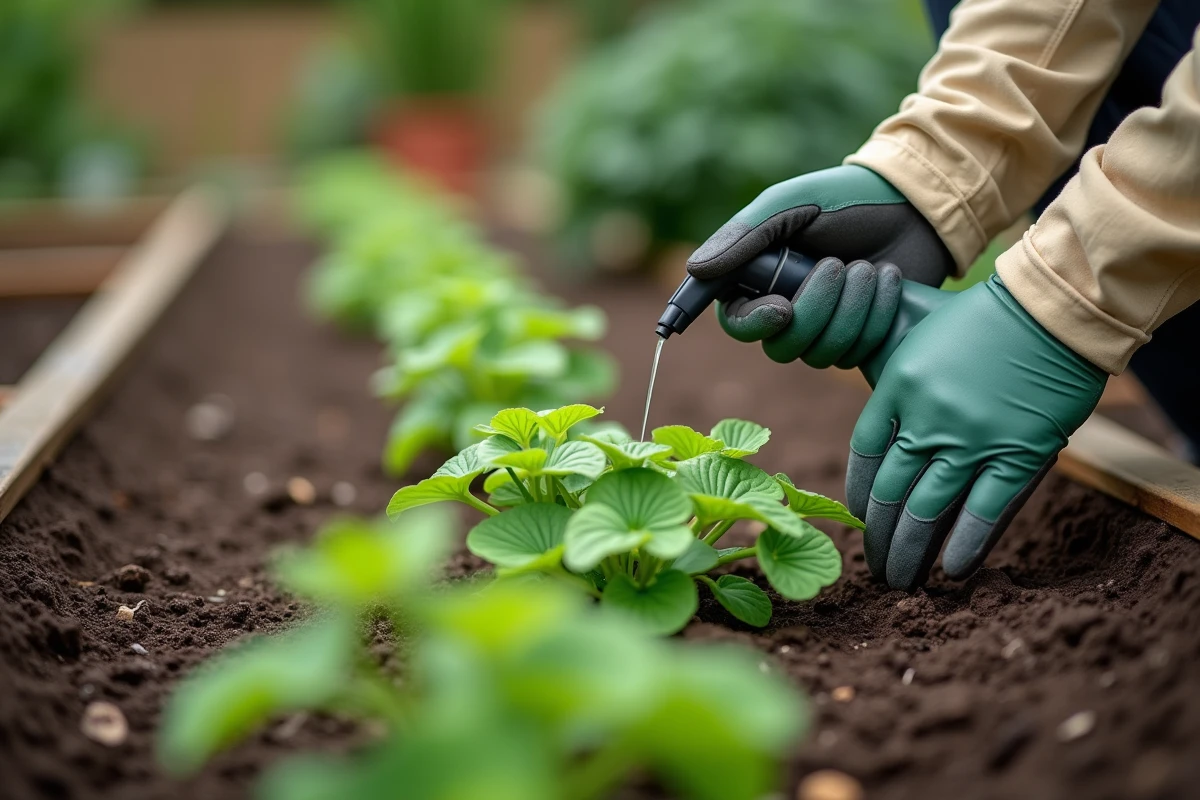
- A total systemic herbicide applied with a brush, directly on the leaves of oxalis, to avoid touching neighboring plants. This method requires patience but limits collateral damage.
- A thick mulch (at least several centimeters of shredded material or bark) combined with a methodical pulling of regrowth. The mulch deprives the bulbs of light and slows their germination.
- On paths and mineral surfaces, a total herbicide can be sprayed more broadly, provided that distances from water points and cultivated areas are respected.
Natural herbicides against oxalis: real effectiveness and regulatory limits
Concentrated white vinegar, salt, bleach: these solutions circulate abundantly online. However, their effectiveness on oxalis is very limited, and their legal framework is stricter than one might think.
Homemade mixtures are not authorized phytopharmaceutical products. Several French and European authorities remind us that vinegar and salt can contribute to soil salinization and water pollution. Their use is recommended only on impermeable surfaces (terraces, slabs), not in open ground.
On established oxalis in a bed or lawn, vinegar burns the leaves without reaching the bulbs. Salt sterilizes the surrounding soil, which also prevents your cultivated plants from growing. Bleach destroys the microbial life of the soil. None of these solutions replace careful mechanical weeding or a targeted systemic product.
Application protocol to maximize treatment effectiveness
Spraying a herbicide on oxalis is not enough. The timing and method of application radically change the outcome.
Treat when oxalis is actively growing, that is, in spring (April-May) or early autumn (September). In summer, heat and drought slow down sap circulation, which reduces the migration of the product to the bulbs.
Before application, avoid mowing or cutting for a week. The plant needs maximum leaf surface to absorb the product. The more developed the leaf, the more effective the transfer to the roots and bulbs will be.
- Apply in dry weather, with no rain expected in the next six hours.
- Follow the doses indicated on the product label. Overdosing does not kill better: the plant burns on the surface before absorbing the active ingredient.
- Plan a second application three to four weeks after the first to treat regrowth from surviving bulbs.
- Do not turn the soil after treatment, as this disperses the remaining bulbs into new areas.
Should you really eradicate oxalis from your garden?
The genus Oxalis includes over 800 species. Some are intentionally planted as ground cover or cultivated indoors for their aesthetic qualities. Complete eradication is not always the most relevant goal.
In a well-maintained lawn or vegetable garden, the competition from oxalis justifies intervention. In a low-maintenance shrub bed, tolerating a few oxalis plants avoids repeated treatments and preserves soil life. Reasoned management, which combines mulching, targeted pulling, and occasional systemic treatment on the densest areas, yields better long-term results than a permanent chemical war.
Oxalis will almost always return to a garden, transported by potting soil, compost, or birds. The realistic goal is to contain its spread, not to eliminate it permanently. Every mechanical or chemical intervention should target the bulbs; otherwise, the cycle will restart in the following season.