
A food as ordinary as bacon can spark a passionate debate among young parents. We are talking about a product that is ubiquitous in family kitchens, yet its introduction to toddlers is never straightforward. Health professionals remind us that cooked meats can be introduced as early as six months, provided that their composition and salt content are closely monitored. However, bacon does not play in the same league as chicken breast. Additives, salt, infectious risks: every detail matters. For families, caution is essential, especially in the face of invisible threats like listeriosis or toxoplasmosis, which are very real dangers for pregnant women and young children.
Bacon and Pregnancy: What You Need to Know Before Considering Introduction to Baby
When it comes to bacon and pregnancy, strictness is required. To limit risks, cooking becomes non-negotiable: it is the best defense against the infamous Listeria monocytogenes, a bacterium that likes to hide in undercooked meats. Bacon must always be perfectly cooked, leaving no room for approximation. Forget any raw or merely warm meat: here, caution is never excessive. Each step requires impeccable hygiene: clean hands, reserved utensils, cleaned work surfaces, nothing should be left to chance. Let’s not forget about toxoplasmosis, transmitted by the Toxoplasma gondii parasite, which threatens non-immune pregnant women. For them, consuming bacon requires constant attention. For parents, this question goes beyond simple dietary choices. It is about protecting the health of the mother and her child, adhering to food hygiene rules, and keeping any unwanted microbes at bay. To delve deeper into this topic, the site bacon for baby on Le Paris des Lardons offers a detailed dossier on family food safety. The expiration date is non-negotiable. For the baby’s safety, prioritize a fresh product, cook it quickly after purchase, and ensure it is well-cooked. Only this vigilance allows for the introduction of solid foods without fear.
What Are the Risks Associated with Bacon for Young Children and How to Prevent Them?
The introduction of bacon to young children raises several precautions. The first very concrete risk: choking. Its texture and size can cause a blockage if the piece is not suitable. Each portion must be cut into very small pieces, appropriate for the child’s chewing ability. But that’s not all. From a microbiological standpoint, insufficiently cooked bacon can contain feared pathogens like Listeria monocytogenes, a potential source of foodborne infections. Complete cooking at a high temperature is necessary to neutralize germs. The freshness of the product and strict hygiene during preparation are also essential.
Here are some concrete measures that reduce risks when introducing bacon:
- Always seat the child upright, under the supervision of an adult.
- Adapt the texture: crumble or blend the bacon according to age, and respect the child’s pace without forcing.
- Introduce potentially allergenic foods gradually, at the beginning of solid food introduction (between 4 and 6 months), after consulting the pediatrician.
A child who systematically refuses pieces or shows persistent nausea beyond 10 to 12 months deserves a pediatric evaluation. Quickly identifying potential feeding disorders allows for timely intervention. Observe, adapt, respect the toddler’s pace: this is the guiding principle of food safety.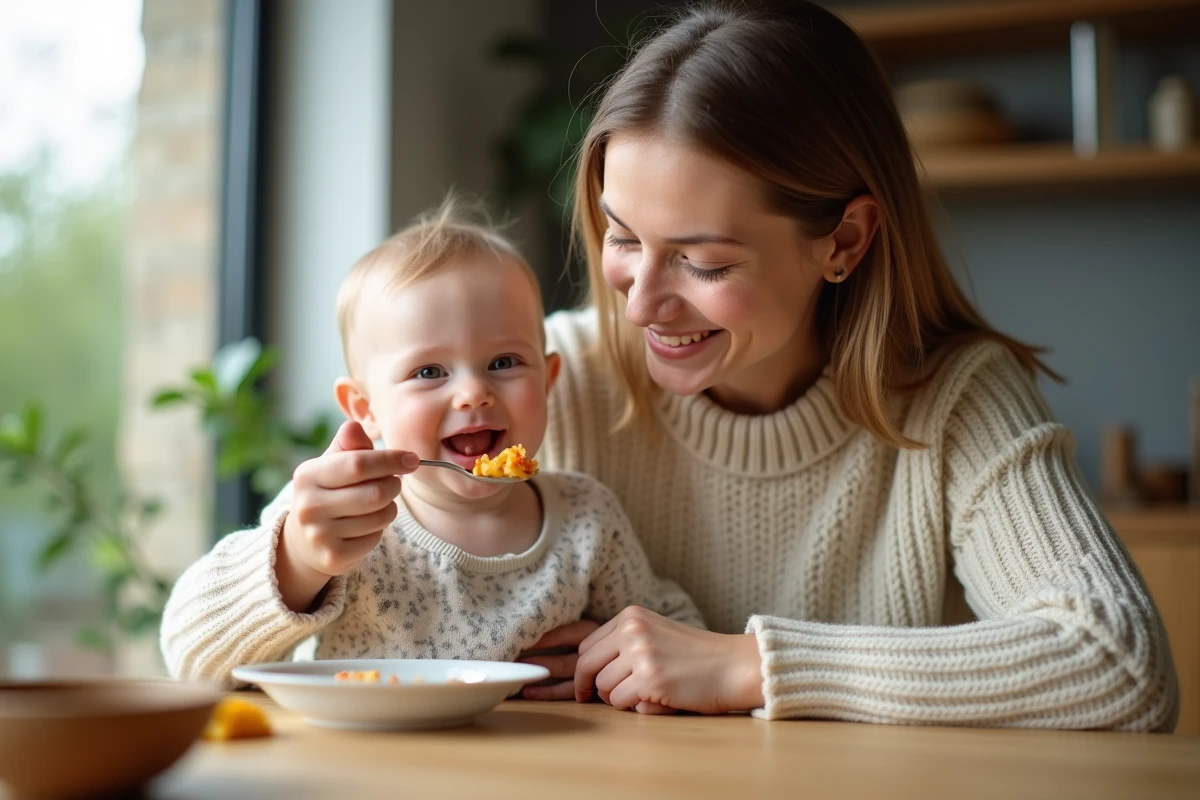
Practical Tips for Integrating Bacon into Baby’s Diet with Peace of Mind
Introducing solid foods opens the door to new flavors and textures. Between 4 and 6 months, start with smooth purees. Around 8 months, introduce very soft pieces: well-cooked bacon, finely crumbled, can be added to a puree or mashed vegetables. By 10 months, you can try small firmer pieces, which encourages chewing and oral motor skills.
To help parents navigate this stage smoothly, here are some practical tips:
- Work on the texture: bacon crumbs can easily blend into a puree or a simple dish.
- Ensure impeccable cooking: all bacterial risks, especially listeriosis, must be eliminated.
- Share meals as a family: the child learns by imitating, and this moment fosters their autonomy and positive relationship with food.
Baby-Led Weaning (BLW) is gaining traction: the baby grabs foods suitable for their grasp. However, this method does not replace spoon-feeding, which is necessary to avoid any nutritional deficiencies.
Nausea reflexes are common at the beginning: this is a normal and temporary phase. Allow the child to explore at their own pace, without ever forcing them. The more confidence there is, the more natural and enjoyable the discovery of foods becomes. This is also the best way to prevent future blockages at the table.
Opening up the possibilities on a baby’s plate also means giving them a taste for discovery, one small piece at a time, under the watchful eye of their parents.