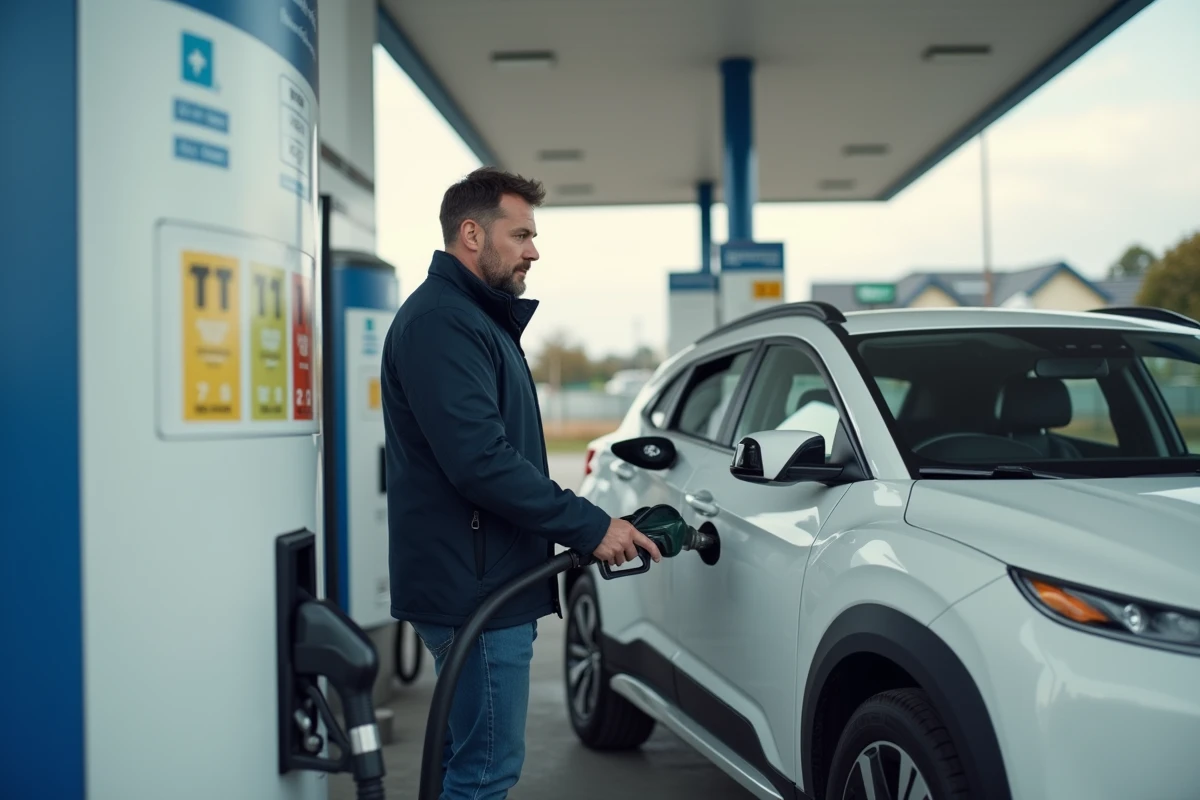
The Hyundai Kona is available in four distinct engine options (petrol, diesel, hybrid, electric), each associated with a specific fuel or energy source. Choosing the right fuel is not just about aiming for the cheapest pump: engine compatibility, emission standards, and real cost per kilometer form a trio of criteria to consider. This article compares the technical data and practical constraints for each Kona configuration.
Hyundai Kona Engine Options and Compatible Fuels
| Engine Option | Engine Type | Compatible Fuel(s) | Emission Standard |
|---|---|---|---|
| Petrol 1.0 T-GDI | 3-cylinder turbo | SP95-E10, SP95, SP98 | Euro 6d |
| Petrol 1.6 T-GDI | 4-cylinder turbo | SP95-E10, SP95, SP98 | Euro 6d |
| Diesel 1.6 CRDi | 4-cylinder turbo | B7 (diesel), B10 | Euro 6d |
| Hybrid | GDI + electric motor | SP95-E10, SP95, SP98 | Euro 6d |
| Electric | Electric motor (kWh) | Electricity (AC/DC charging station) | Zero local emissions |
This table summarizes the basic associations. Each row refers to different trade-offs, detailed in the following sections.
Identifying the type of fuel for Hyundai Kona suitable for your specific version remains the first step before any price or performance comparison.
SP95-E10 vs SP98 on the GDI Engines of the Petrol Kona
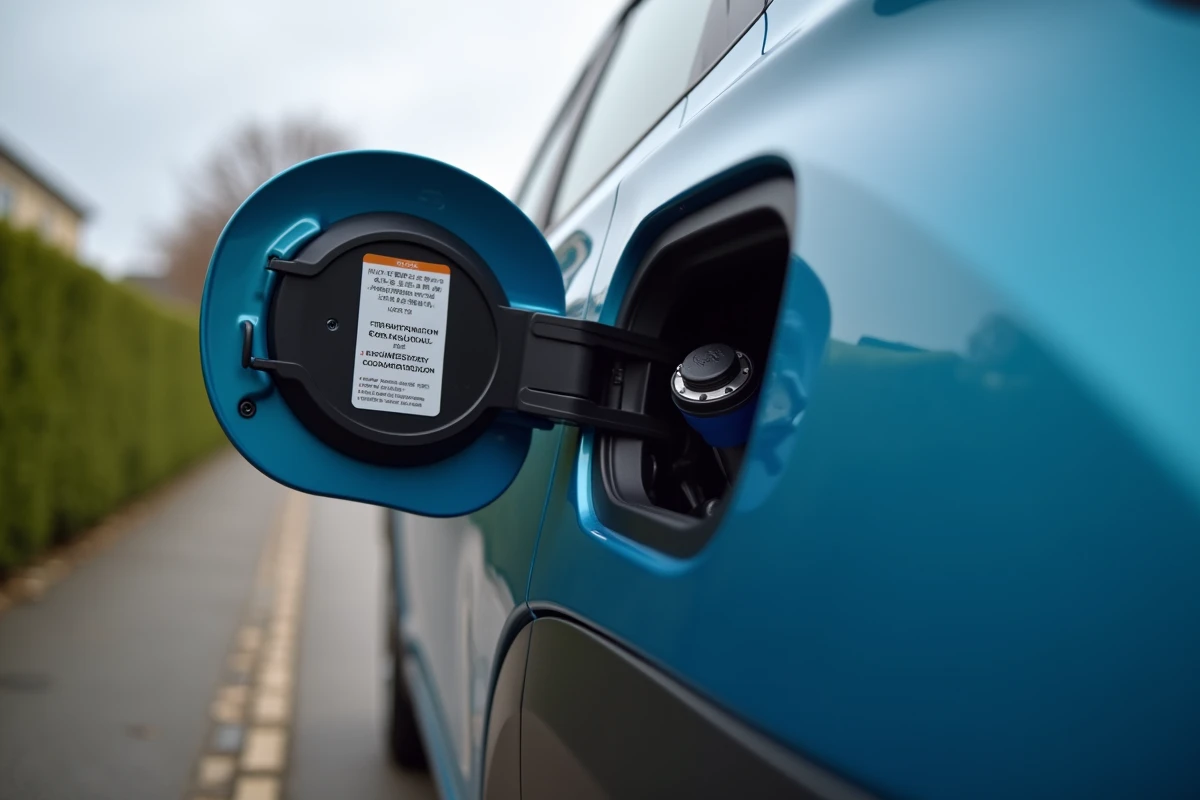
Since 2024, the generalization of SP95-E10 as standard petrol in France has led Hyundai to update its onboard documents and the labeling of the fuel flap on recent petrol Konas. The T-GDI 1.0 and 1.6 engines are calibrated to operate optimally with SP95-E10, in accordance with Euro 6d standards.
SP98 remains compatible, but feedback from owners on specialized Hyundai forums and Reddit converges on a clear observation: SP98 does not provide a significant performance gain on the T-GDI Konas. Some drivers report a slight improvement in engine smoothness or marginally lower consumption on long highway trips.
The Price Gap Nullifies the Theoretical Benefit
The extra cost of SP98 compared to SP95-E10 is measured in cents per liter, but accumulated over a year of daily driving, the difference reaches several dozen euros. For an engine already designed and mapped for E10, this additional cost does not find a clear economic justification in daily use.
In summary, for a recent petrol Kona, SP95-E10 meets the engine’s needs without compromise. SP98 may be justified occasionally during long trips if you seek a slight increase in engine comfort, but not as a default choice.
Kona Diesel and the Evolution of B7 and B10 Diesel Fuels
The 1.6 CRDi versions of the Kona accept standard B7 diesel (containing up to 7% biodiesel) as well as B10 (up to 10%). Compatibility with B10 depends on the vehicle’s year: Euro 6d compliant models are validated by Hyundai for both types.
A parameter often overlooked in consumer guides concerns the revision of the TICPE taxation on B7 and B10. In 2023-2024, this revision has caused, in some regions, a convergence of prices between diesel and SP95-E10. The historical price advantage of diesel has diminished, altering the trade-off for recent Kona diesel owners.
Criteria to Check Before Choosing B7 or B10
- Check the label on your Kona’s fuel flap: it explicitly indicates “B7” or “B7/B10” depending on the model’s compatibility
- B10 may slightly affect the particulate filter on older engines (pre-Euro 6d), check the year of registration
- Availability of B10 at stations varies by region, B7 remains widely distributed

Hybrid and Electric Kona: Specific Constraints Often Overlooked
The hybrid Kona uses a GDI engine coupled with an electric motor. Regarding fuel, the rules are the same as for the petrol version: SP95-E10 as the reference, SP95 and SP98 compatible. The peculiarity lies in the driving behavior. The thermal engine operates intermittently, which reduces overall consumption but does not change the type of fuel required.
The electric Kona, on the other hand, eliminates any question of fossil fuel. The battery capacity, expressed in kWh, determines the range. However, the choice between alternating current (home or public AC charging station) and direct current (fast DC charging station) influences the charging time and cost per kilometer.
Impact of Low Emission Zones on Engine Choice
The low emission zones (LEZ) strengthened since the implementation of Euro 6d standards are progressively penalizing diesel vehicles, including the CRDi Konas classified as Crit’Air 2. In the affected French metropolitan areas, a petrol Kona (Crit’Air 1) or electric Kona (Crit’Air 0) can circulate without restriction.
This regulatory parameter increasingly weighs in the calculation of total cost of ownership. A diesel Kona that is cheaper to purchase may become more expensive if traffic restrictions force detours or parking outside the LEZ.
- Crit’Air 0: Electric Kona, no current or foreseeable traffic restrictions
- Crit’Air 1: Petrol and hybrid Kona (Euro 6d), guaranteed access to current LEZ
- Crit’Air 2: Diesel Kona (Euro 6d), access varies depending on metropolitan areas and local deadlines
The choice of fuel for a Hyundai Kona therefore depends less on the pump than on the engine type, the vehicle’s emission standard, and its geographical use. SP95-E10 is sufficient for all petrol and hybrid versions, B7 remains the safe bet for diesel, and electric vehicles escape the fuel equation. The Crit’Air sticker and the evolution of LEZ are the factors most likely to disrupt this trade-off in the coming years.