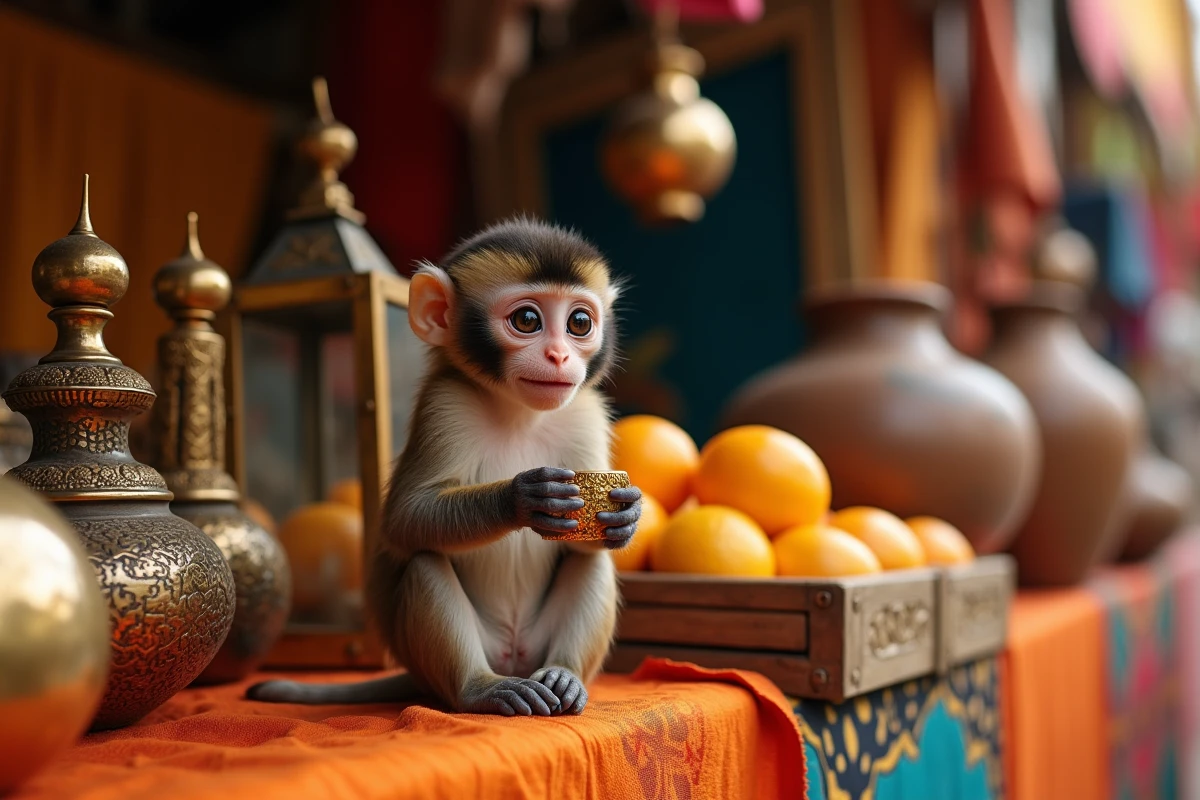
Abu, the thieving capuchin monkey who first appeared in 1992 in the film Aladdin, remains one of the most cited secondary characters by Disney fans. His scenes rely almost exclusively on visual humor and physical comedy, without articulated dialogue. What specific moments have left the most impact on the audience, and what distinguishes these sequences from other sidekicks from the studio?
Abu’s Silent Humor vs. Dialogue of Other Disney Sidekicks
Abu’s uniqueness lies in a rare writing choice for a Disney companion of that era: his comedic style is almost entirely non-verbal. While the Genie, in the same film, delivers numerous lines and vocal imitations, Abu operates through facial expressions, gestures, and physical reactions.
This choice brings Abu closer to the tradition of slapstick than to talking buddy comedies. Fans revisiting the film often cite his silent action scenes as those that age the best, precisely because they do not rely on dated cultural references.
| Character | Film | Main Comedic Style | Articulated Dialogue |
|---|---|---|---|
| Abu | Aladdin (1992) | Slapstick, visual humor | No (screams, grunts) |
| Genie | Aladdin (1992) | Verbal improvisation, imitations | Yes (central) |
| Timon and Pumbaa | The Lion King (1994) | Verbal comedy duo | Yes |
| Mushu | Mulan (1998) | Sarcastic lines | Yes (central) |
| Pascal | Tangled (2010) | Visual humor, facial expressions | No |
This table highlights an often underestimated point: Abu shares his silent style with very few major Disney sidekicks. Pascal, much later, will adopt this principle. Between the two, almost all Disney comedic companions rely on dialogue.
For fans interested in the specific sequences that shaped the character’s reputation, the monkey Abu in Disney’s Aladdin focuses the analysis on the iconic scenes from the original animated film.
Iconic Scenes of Abu in Aladdin: What Fans Really Remember
Not all of Abu’s appearances hold the same weight in collective memory. Certain sequences consistently come up in online discussions and fan compilations.
The Bread Theft at the Agrabah Market
Abu’s very first scene immediately establishes his character. The capuchin diverts a merchant’s attention while Aladdin steals bread. This opening sequence defines Abu as an active accomplice, not just a simple mascot. The viewer understands the dynamic of the duo within seconds: Aladdin plans, Abu executes with opportunistic agility.
The Temptation of the Ruby in the Cave of Wonders
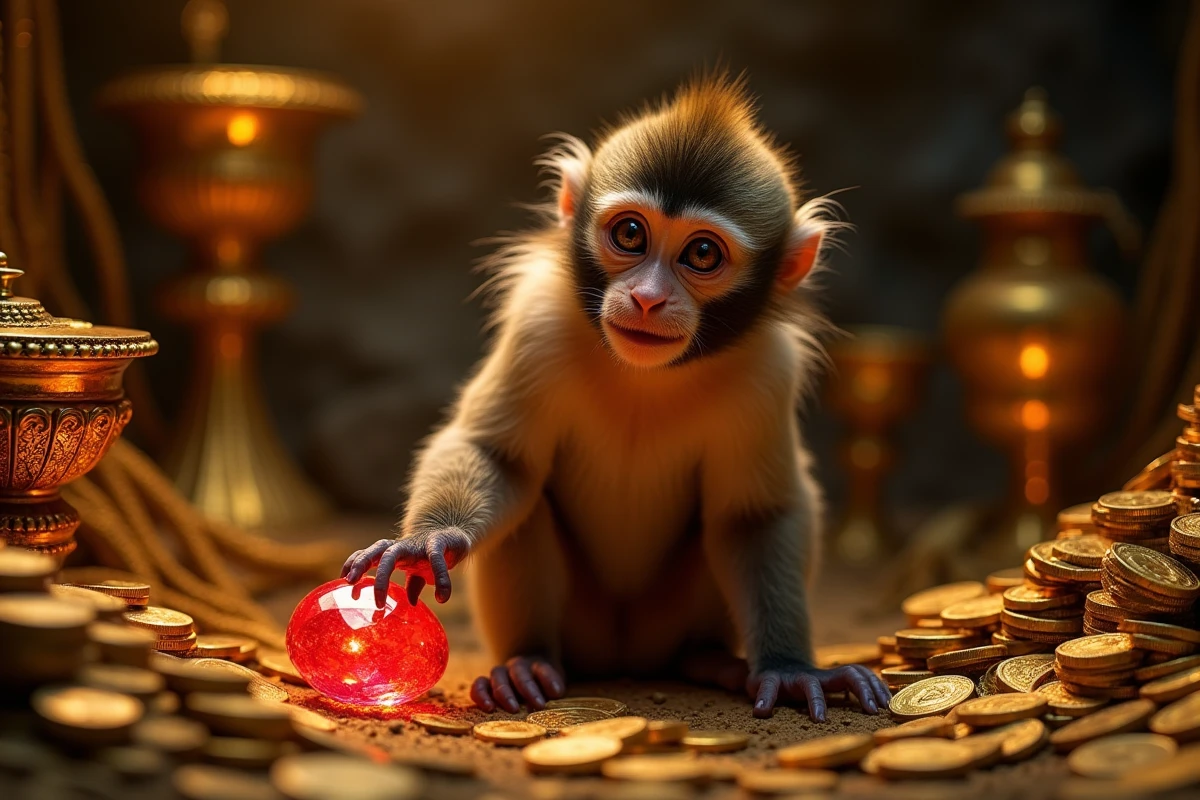
The Cave of Wonders commands not to touch any treasure. Abu resists, then succumbs to the temptation of a huge ruby. This action triggers the cave’s collapse and constitutes the main narrative twist of the first act.
Abu causes the film’s central catastrophe due to a character flaw, not by accident. This is an unusually heavy narrative mechanism for a comedic sidekick. The character carries a real dramatic consequence, giving him a depth that most Disney animal companions do not achieve.
The Transformation into an Elephant
When the Genie transforms Abu into an elephant for Prince Ali’s parade, the scene plays on the contrast between the animal’s imposing size and the monkey’s timid personality. Abu retains his capuchin facial expressions on an elephant’s body, creating a lasting comedic effect.
- The bread theft illustrates Abu’s complicity and agility, setting the tone for the film from the very first minutes.
- The ruby scene in the Cave of Wonders gives the character a rare narrative weight for a non-speaking sidekick.
- The transformation into an elephant exploits physical disparity for a visual gag that works without any dialogue.
Abu in the 2019 Live-Action Film: A Reduced Role That Fuels Nostalgia
The live-action remake released in 2019 retains Abu, but his screen time and narrative importance significantly diminish compared to the animated film. Critical feedback on this adaptation highlights that the function of the silent comedic sidekick loses effectiveness with a CGI monkey.
Slapstick relies on exaggerated facial expressions and the freedom of animated traits. A realistic CGI character cannot stretch a grimace or flatten a body in the same way. Fans comparing the two versions regularly point out this loss of comedic readability.
This difference partly explains why fan compilations and tributes focus heavily on the 1992 film. The animated feature offers Abu an expressive range that digital realism constrains. In contrast, the remake gives the character a few moments of complicity with Aladdin that work on a more subdued, less burlesque level.
Cultural Stereotypes and Contemporary Reinterpretation of Abu’s Scenes
Recent analyses of Aladdin are no longer limited to nostalgia. The 1992 film is subject to reinterpretations that question the visual and narrative stereotypes associated with its representation of the Arab world. Abu, as the hero’s comedic companion, is part of this debate without being its main target.
His role as an agile thief in the Agrabah markets contributes to an aesthetic that some critics consider caricatured. Abu’s perception evolves depending on whether the viewer watches the film through the eyes of 1992 or those of today. Fans most attached to the character generally distinguish his comedic writing, which they deem universal, from the film’s visual framework, which they recognize as dated.
This distinction explains Abu’s longevity in Disney popular culture. His scenes operate on physical and emotional springs that do not depend on the fictional geographical context. A monkey succumbing to the temptation of a shiny jewel or panicking in the form of an elephant remains readable in any narrative framework.
Abu remains, among the studio’s secondary characters, one of the few whose memorable scenes rely exclusively on silent acting. This writing choice, which seemed trivial in 1992, turns out to be the main reason why his iconic moments transcend decades without aging a bit.