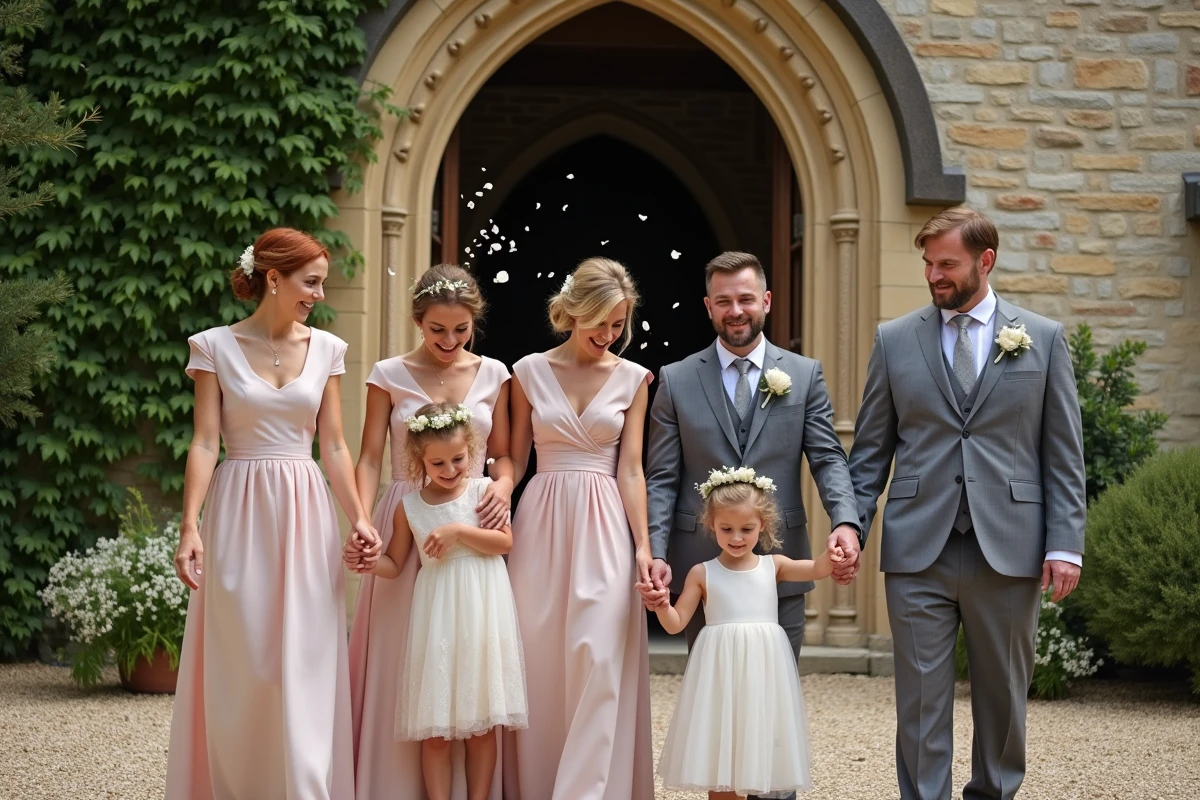
In Brittany, brides could once wear a white headdress even in the case of recent widowhood, unlike the national custom that imposed black. Conversely, some regions in the South strictly prohibited the wearing of white for second marriages. In several villages in the Basque Country, the wedding procession does not follow the same order as elsewhere, sometimes reversing the place reserved for the groom’s family.
From one province to another, the customs related to marriage reveal an unexpected diversity, shaped by history, local law, or simple popular beliefs. This patchwork of practices leads to celebrations with multiple faces, often unknown outside their territory of origin.
A Living Heritage: Why Wedding Traditions in France Continue to Fascinate
The traditional French wedding, far from being set in stone, evolves through the ages by reinventing itself while never turning its back on its origins. While the white dress continues to embody this new beginning, each couple appropriates the rites in their own way, blending respect for the past with a desire to mark their difference. The ceremony then becomes the theater of personal expression, halfway between heritage and creativity.
Wedding customs vary from region to region and offer a kaleidoscope of gestures and symbols. Here are some examples that speak volumes about this richness:
- the throwing of lavender in the villages of Provence
- the jonchure in the North, to accompany the newlyweds
- the giant brioche, a true institution in Vendée
- the joyfully noisy car processions in Normandy
Each territory cultivates its specificities, sometimes passed down from generation to generation, sometimes adapted to modern tastes. Behind these rites lies the story of a plural France, attached to its roots but open to invention. A Breton umbrella, onion soup shared at dawn, or a blessing given by parents: these are details that give meaning to the celebration and reinforce the sense of belonging.
The rings exchanged on the left ring finger, the bouquet thrown for the single ladies, the dragées offered to share: these gestures, which have become essential, embody the transmission of wishes for happiness, prosperity, and sometimes even fertility. Instead of opposing past and present, modernity invites itself, enriches, and transforms the heritage without erasing it.
To learn more about Les Liens du Mariage, one simply needs to dive into this abundance of practices. Here, French wedding traditions are not a fixed folklore, but a living link between generations and territories, offering each union a unique, almost indelible strength.
What Are the Essential Customs at a French Wedding?
It’s hard to imagine a traditional French wedding without the white dress, a symbol of renewal. The veil worn by the bride signifies both a desire for modesty and protection, while the garter, inherited from the Middle Ages, evokes the purity of yesteryear. Before the ceremony, the bride surrounds herself with four objects, as custom dictates:
- an old one
- a new one
- a borrowed one
- a blue one
Each of these elements carries its own meaning: continuity, novelty, future happiness, fidelity.
As the couple exits the town hall or church, guests throw rice, a gesture carrying wishes for prosperity and fertility. Tradition also dictates that horns sound in the procession, a noisy sign of shared joy. Then comes the significant moment of exchanging rings on the left hand, sealing a commitment that the couple wishes to be eternal.
The bouquet toss, a suspended moment, attracts all eyes: the one who catches it will, according to belief, be the next to marry. The dragées, meanwhile, are offered to all guests. They symbolize health, happiness, longevity, fertility, and prosperity.
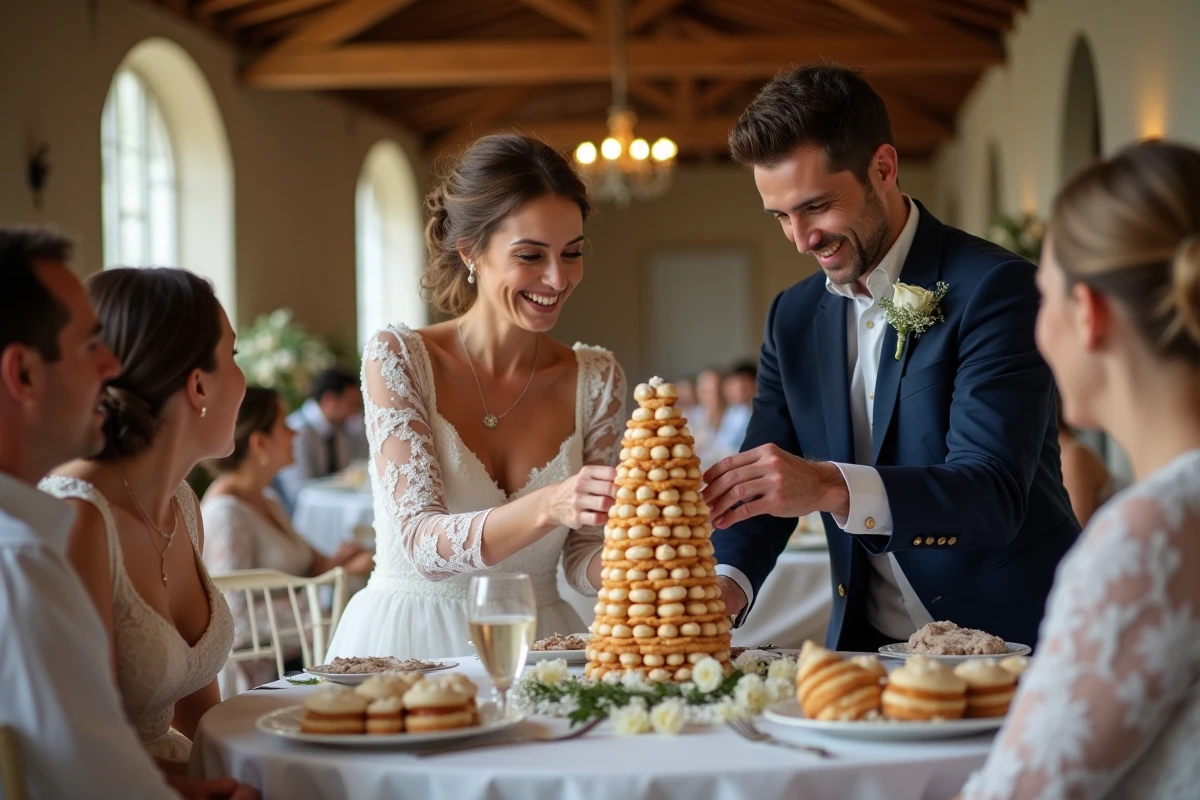
The celebration doesn’t stop there. Champagne fountains, tiered cakes, speeches that are sometimes funny, sometimes moving, followed by onion soup or a chamber pot served at dawn. The wedding night ends in sharing, conviviality, and a succession of meaningful gestures.
Regional Inspirations to Personalize Your Ceremony
In France, it’s impossible to reduce traditional marriage to a single image: each region cultivates its own rituals and enriches the palette of possibilities. In the North, the jonchure gathers relatives and neighbors to carpet the newlyweds’ path with branches and flowers, a testament to a deep attachment to the collective. In Brittany, the sounds of the biniou resonate, and the umbrella carried by the bride serves both as adornment and a talisman against bad omens.
The South is no exception, with Provence scenting its unions with lavender. Here’s what future newlyweds might choose to incorporate into their celebration:
- sprinkling lavender on the couple, for happiness and fertility
- sharing a Vendée brioche, a symbol of generosity
Sometimes, in New Aquitaine, a young pine is planted to signify the couple’s rooting in their land. In the Centre-Val de Loire, the tradition of the chamber pot or onion soup concludes the night in good spirits. Overseas, other rituals take over: the passing down of a family heirloom, the rum of honor, Creole music. Each custom tells a story, that of a family, a terroir, a collective memory.
Ultimately, these regional traditions give each couple the opportunity to anchor their union in a common narrative, without ever fading behind folklore. It is these details, sometimes minute, that tint French weddings with a unique color, leaving behind memories as solid as a wedding ring, as fragrant as a freshly picked bouquet of lavender.